Monday, February 8, 2016

LAD #30: Schenk V US

Summary of the Schenk V. US case -

In 1919, the Supreme Court ruled the case in favor of the United States.  The case had to do with the Espionage Act of 1917 that was put into place due to The Great War.  Charles Schenk mailed brochures about the draft being a ridiculous monstrous thing.  The Supreme Court had to decide whether the freedom of speech protected his actions or not.  In wartime, the same things are not as tolerable as they are during peace.


Sunday, January 17, 2016

LAD #28: Wilson's First Inaugural Address

Summary of Woodrow Wilson's First Inaugural Address, 1913 -

President Wilson commences his First Inaugural Address on March 4, 1913 by stating that the success of a party occurs when a nation uses it for a large, important purpose.  America is a great country that has built itself and its industrial achievements up, but the costs it had on the people were forgotten.  Now, the evil must be corrected; justice is the current motto.  Wilson promises not to fail men in his goal to establish balance and fulfill hopes.

LAD #27: Clayton Anti-trust Act

Summary of the Clayton Anti-trust Act -

The purpose of this act was to supplement existing laws such as the Sherman Anti-trust Act.  It states that is is illegal to discriminate prices so that competition decreases.  Sales can not be made under the condition that the consumer promises not to purchase from other competitors.  Additionally, there can be no mergers not acquisitions that could promote trusts or monopolies.

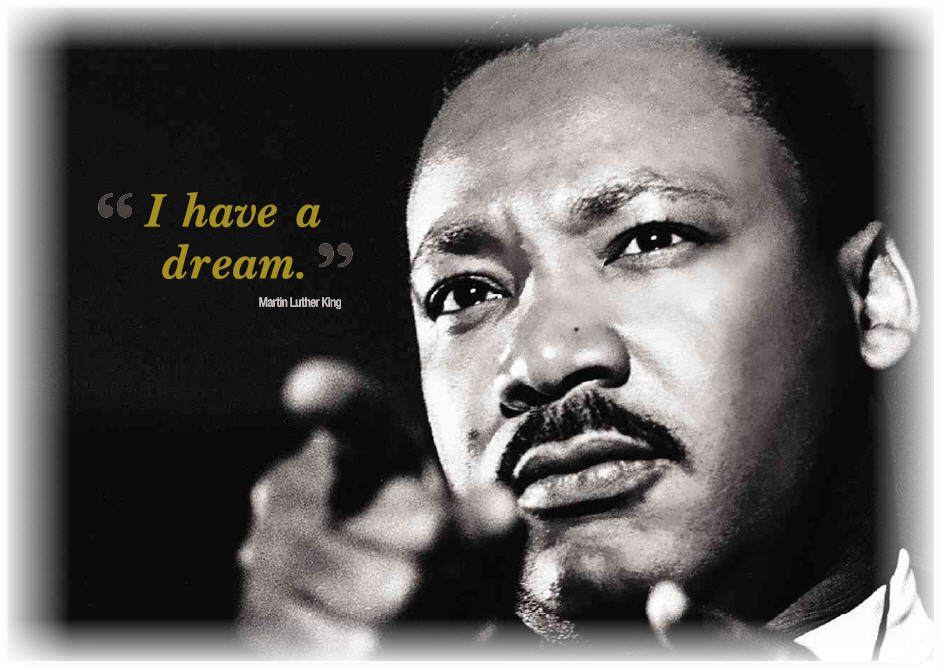
LAD #26: "I Have a Dream" speech

Summary of Martin Luther King Jr's "I Have a Dream" speech -

MLK Jr's speech, delivered on August 28, 1963, starts by talking about the hope that the Emancipation Proclamation gave to the millions of slaves.  However, the blacks are not truly free as they still face discrimination and poverty.  It is now that America must end segregation and follow through with its promise of democracy.  His dream is that freedom will ring all across America, a great country.  "Thank God Almighty, we are free at last".

Friday, January 8, 2016

LAD #25: Dawes Severalty Act

Summary of the Dawes Act of 1887 -
The Dawes Act is "an act to provide for the allotment of lands in severalty to Indians on the various reservations, and to extend the protection of the laws of the United States and the territories over the Indians, and for other purposes."  This act, approved by Congress, authorized the President to survey Indian land and divide it up for individual Indians.  The head of the family would receive 160 acres, an individual or an orphan minor would receive 80 acres, and minors would receive 40 acres.  If the Indians abandoned their tribes for the allotted land, they would gain U.S. citizenship.

LAD #24: Cross of Gold Speech

Summary of William Jennings Bryan's Cross of Gold Speech -
William Jennings Bryan delivered this speech on July 9, 1896 during the Democratic National Convention.  The topic discussed was the whether or not to endorse the free coinage of silver at the ratio of silver to gold, 16:1.  If this was enforced, the indebted farmers would be aided due to the increase in money circulation.  Bryan advocates for a monetary system called bimetallism in which the new currency would equal a set amount of gold and silver.  Putting this system into place would benefit the country and end deflation.


LAD #23: The Populist Party Platform

Summary of The Populist Party Platform -
The Populist Party emerged in the 1870s and 1880s, but in the 1890s they became a possible viable third party.  This party opposed banks and big businesses as well as industrialism.  The platform states the horrible working conditions for the common laborer.  To solve this the Populists declare the institution of permanent labor unions.  The party also demanded that the government should create a safe national currency, own railroads, telegraphs, and telephones.  Populists are also in favor of a free ballot, abolition of mercenary armies, shorter hours, and initiative and referendum.