Thursday, November 12, 2015

LAD #13 - John Calhoun's Speech

Summary of Calhoun's The Clay Compromise Measures

On March 4, 1850, John C. Calhoun's most famous speech was delivered by another senator due to Calhoun being too ill.  Calhoun believes that the issue of slavery will be the cause of a disunited America.  His thoughts go largely ignored, so he then asks how the union can be saved and what has endangered the Union.  Calhoun believed the main factor of the division between the North and South was slavery.  The North and South were like polar opposites, and Calhoun though that the differences could be traced back to the act of owning and selling slaves.  Additionally, the North's representation in the Senate was increasing as America expanded and gained more states.  Calhoun stated that slavery was necessary and it was the South's right to have slaves.  Neither the new economical system nor immigrants were beneficially impacting the South. The Union could be preserved if the North just restored the balance that was once between the two areas.

LAD #20: Emancipation Proclamation

Summary of the Emancipation Proclamation -

Lincoln issued the Emancipation Proclamation on September 22, 1862.  It stated that on the first day of the year 1863, all slaves would be free and the federal government will work to recognize and maintain their freedom.  He asks these free slaves to not be violent unless it is self defense and to work hard for reasonable wages.  Freed slaves are also able to join the armed services of America.


LAD #12 - President Polk's War Message

Summary of Polk's War Message, 1846

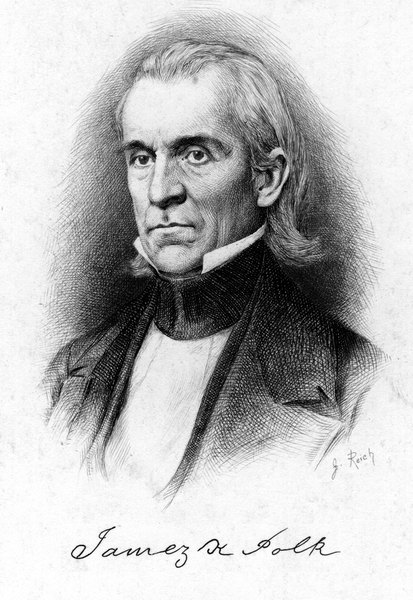
James K. Polk delivered a speech to Congress on the reasons we should go to war with Mexico.  Originally, Polk sought after a diplomatic solution to the border disputes and to the unjustified actions of the Mexican government to American settlers along that border.  As a result, Polk sent an envoy, John Slidell, to negotiate, but Mexico turned Anerica away and refused to hear any of their propositions.  Mexico then invaded United States territory.  All efforts to maintain friendly ties failed.  The U.S. decided to send in troops to defend the newly annexed territory and its citizens.  Mexican troops were invading our land and killing our soldiers.  This is why Polk saw it justified to go to war.


LAD #11 - Seneca Falls Declaration

Summary of The Seneca Falls Declaration of Sentiments and Resolutions -

The Seneca Falls Convention, held from July 19-20, 1848, was the first convention for women's rights.  It was organized by Elizabeth Cady Stanton and Lucrecia Mott.  It advocated for both the emancipation of women and slaves.  Throughout history, men have held all the power over women.  Women can not vote, can not own property, and is required to be obedient to her husband.  Man made it so that women must depend on men to live their lives.  Women believed that these rules were unjust and felt that they were entitled to the same rights as men, as they too were American citizens.  God is supreme and he dictated that one should pursue true happiness.  As the superior being, this statement resolved that women were created equal to men, that they should have the right to vote, and that it was their duty to attain that right.


Tuesday, October 27, 2015

LAD #10: Monroe Doctrine

1. What did the issuing of the Monroe Doctrine express from an American perspective post War of 1812?
From an American's perspective, the Monroe Doctrine expressed the people's confidence now they were able to not lose a war against the British. It also expressed that they would not allow other countries to colonize America or any part of it.  The doctrine said that they would respond to any attempt with military force.  The Monroe Doctrine was a statement of power.

2. What was Secretary of State Adams' hope when he wrote the Monroe Doctrine?
Adams' hope was that the Monroe Doctrine would keep America out of wars with Britain. He also wanted the U.S to remain neutral in general.  Adams also hoped to prevent future world wars.  Additionally, he wanted the United States to appear as a strong, unified country.

3. What is the key phrase in the entire document that you need to remember as the cornerstone of American Foreign Policy?
“In the wars of the European powers in matters relating to themselves we have never taken any part, nor does it comport with our policy to do so. It is only when our rights are invaded or seriously menaced that we resent injuries or make preparation for our defense”

Monday, October 12, 2015

Columbus Blog

Was Christopher Columbus a hero or a villain?

      In fourteen hundred ninety-two, Columbus sailed the ocean blue. This is what we learn of him. We are taught of a man who accidentally discovered America while looking for an all-water route to Asia. He is also the man who aided in the decimation of the Native American population. So, is he friend or foe? He is both, however the negative impact he left outweighs his positive actions.
      Christopher Columbus struck a deal with the King and Queen of Spain; the negotiations was called The Capitulations of Santa Fe. The contract earned Columbus 10% of profits of anything he encountered and it also named him "admiral, viceroy, and governor of any land he discovered" (bio.). According to historian Howard Zinn, Columbus falls into the same category as conquistadors, Hernando Cortes and Francisco Pizarro. He brought over diseases that were fatal to the Natives who weren't immune. Columbus and his men enslaved many Indians and sold them, or he put them to work to increase his profits. He treated the natives harshly, brutally killing them. Furthermore, "in an attempt to deter further rebellion, Columbus ordered their dismembered bodies to be paraded through the streets" (History.com). Christopher Columbus heavily mistreated the natives of America that were there long before him. His greed overruled all other traits and he saw them as an ends to a mean, money. It would have benefitted more people if Columbus just stayed on his side of the ocean. Today, we celebrate a man unworthy of a holiday.

Saturday, October 10, 2015

LAD #9: Jefferson's First Inaugural Address

Summary of Jefferson's First Innaugural Address -

Thomas Jefferson swore into office on March 4, 1801. On that day he became the third man to do so. He begins his address with a conveyance to the people of his gratitude for the opportunity he has received. Jefferson portrays modesty and humility at the start. He says that he will look to the Constitution for guidance in making decisions. One of his goals is for a united, yet tolerant, country. So, although the government is based on majority vote, the minority groups will also be heard, even those who don't agree with the Republican view. Jefferson believes that a Republican form of government is the strongest and that the people should go forth with confidence that it is. Every aspect will be bettered: economy, government, society. Jefferson's principles are equal justice for all men, support and preservation of the government, a well trained militia, and a following of the Constitution (freedoms of speech, press, etc.) He concludes his speech by pledging to uphold these principles and do his best to bring peace and prosperity to America. He asks for peoples' forgiveness when he makes mistakes, and he asks they keep confidence in him.